Wisconsin Sea Grant celebrates 20 years of innovative research and partnerships at UW-Stevens Point’s Northern Aquaculture Demonstration Facility
Sometimes, great ideas exist beyond the boundaries of a university campus. The Wisconsin Idea was built on that premise.
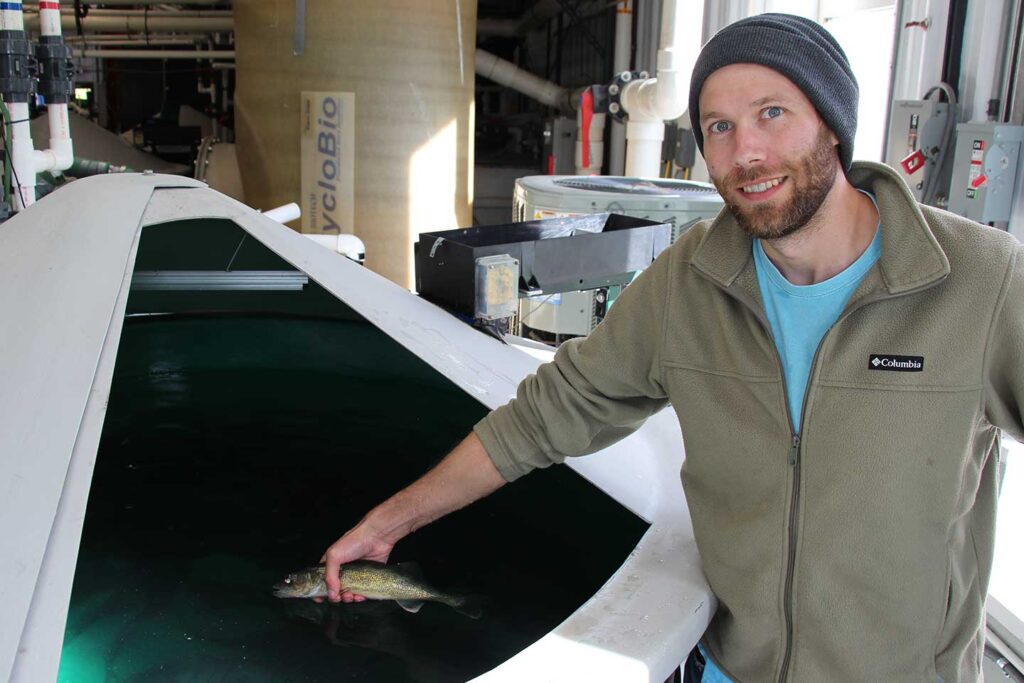
You may not find a better example than the University of Wisconsin-Stevens Point Northern Aquaculture Demonstration Facility (UWSP NADF). Located near the Lake Superior shore on the Red Cliff Band of Lake Superior Anishinaabeg tribal land in Red Cliff, Wisconsin, the facility is a one-of-a-kind center in the Midwest and joins only a handful in the nation that offers similar capabilities in aquaculture research, demonstration, and education.
Facility staff work directly with private industry partners, state and tribal hatcheries, and other universities to identify key issues and formulate projects that seek to ensure sustainable and effective production of fish and meet their goals for research, demonstration, education, and stocking.
Academically, the facility is the leading source of university research into raising walleye in modern recirculating aquaculture systems and has pioneered research into many other aquaculture, fish physiology, and fisheries management topics.
Engaging in research that directly addresses the most pressing upcoming needs for the industry is always the goal.
The facility opened in May 2006, with continued support and collaboration from Wisconsin Sea Grant along with a wide range of private, federal, and state partnerships, as well as support from tribal hatcheries and facilities and various schools, universities, and other organizations. These partnerships reach internationally and involve technology transfer, outreach and demonstration, education, and research collaborations.
Wisconsin Sea Grant support includes amplifying UWSP NADF research on walleye culture for over 15 years, including walleye conservation research as well as for food fish production. That research has enabled the discovery of optimal spawning conditions for walleye to support a successful indoor culture of walleye broodstock.
Wisconsin Sea Grant provides additional support through an aquaculture outreach and education position, created in 2014 and currently held by Emma Hauser. Hauser’s work with aquaculture guides, videos, websites, and other digital content has allowed her to reach thousands of audiences annually through interactive tours of the facility, classroom visits, technical assistance to support culture of various fish species, and coordinating aquaculture outreach events including workshops and conferences.
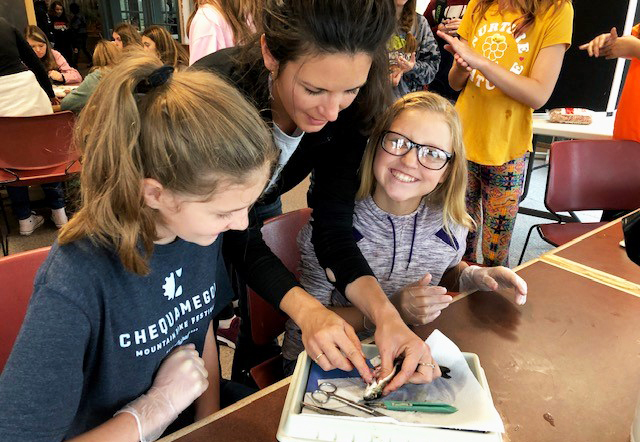
“We have seen an incredible amount of interest in aquaculture over the past decade from both the private industry side as well as the consumer,” said Hauser. “Thanks to the work of UWSP NADF and support of Wisconsin Sea Grant, we continue to see strides being made in public outreach initiatives and research to optimize production, including a recently funded project to advance walleye indoor production through genetic improvement.”
To learn more about UWSP NADF, schedule a tour at aquaculture.uwsp.edu, or watch this highlight video.
Editor’s Note: UW-Stevens Point College of Letters and Science communications staff contributed content to this story.
The UW–Madison Aquatic Sciences Center administers Wisconsin Sea Grant, the Wisconsin Water Resources Institute, and Water@UW–Madison. The center supports multidisciplinary research, education, and outreach for the protection and sustainable use of Wisconsin’s water resources. Wisconsin Sea Grant is one of 34 Sea Grant programs supported by the National Oceanic and Atmospheric Administration in coastal and Great Lakes states that encourage the wise stewardship of marine resources through research, education, outreach, and technology transfer.