Wisconsin Sea Grant project acquires PFAS funding
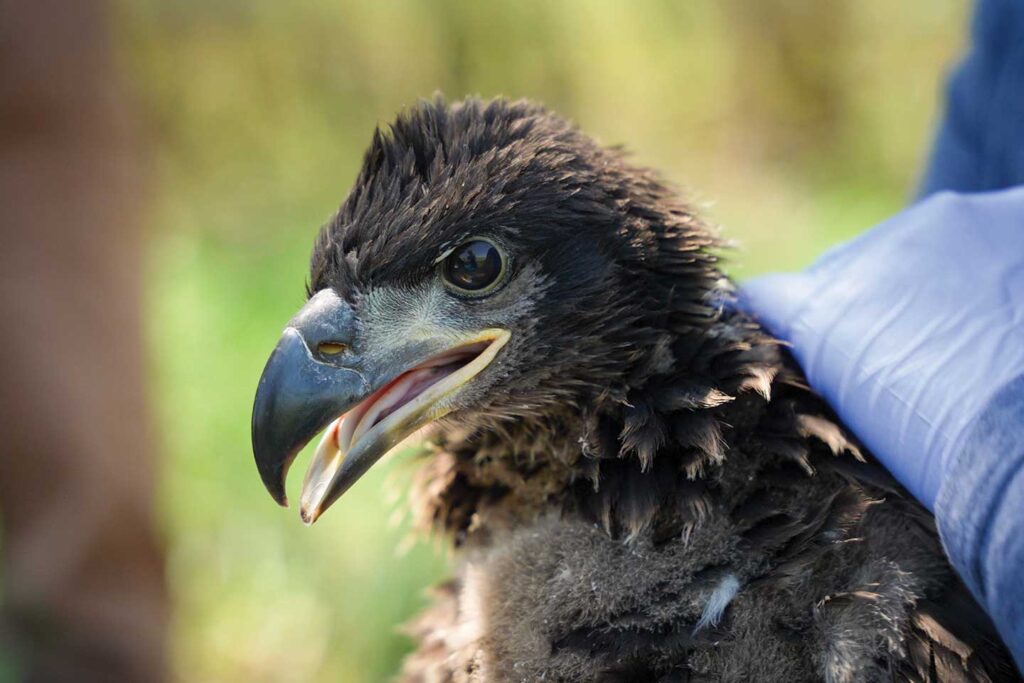
A Wisconsin Sea Grant project investigating the health impacts of per- and polyfluoroalkyl substances (PFAS) on baby eagles will receive nearly $300,000 in funding from the National Sea Grant College Program. The project is one of three slated to receive funds as part of Sea Grant’s $1 million investment in research on contaminants of emerging concern along American coasts.
Since 2021, Congress has directed Sea Grant to collaborate with state agencies and universities to expand research and monitoring on emerging contaminants, such as microplastics and PFAS. The three projects were selected through competitive national opportunities focused on contaminants and will advance regional efforts to research and monitor contaminants and build transferable frameworks that could be adopted by coastal cities and resource managers across the nation.
Read more about the projects on the Sea Grant website.
Learn about Wisconsin Sea Grant’s research on PFAS and baby eagles.
The UW–Madison Aquatic Sciences Center administers Wisconsin Sea Grant, the Wisconsin Water Resources Institute, and Water@UW–Madison. The center supports multidisciplinary research, education, and outreach for the protection and sustainable use of Wisconsin’s water resources. Wisconsin Sea Grant is one of 34 Sea Grant programs supported by the National Oceanic and Atmospheric Administration in coastal and Great Lakes states that encourage the wise stewardship of marine resources through research, education, outreach, and technology transfer.